When comparing an obstruction light price for an overhead power line project, start by checking what the quotation covers and whether the proposed light matches the conductor and operating conditions.
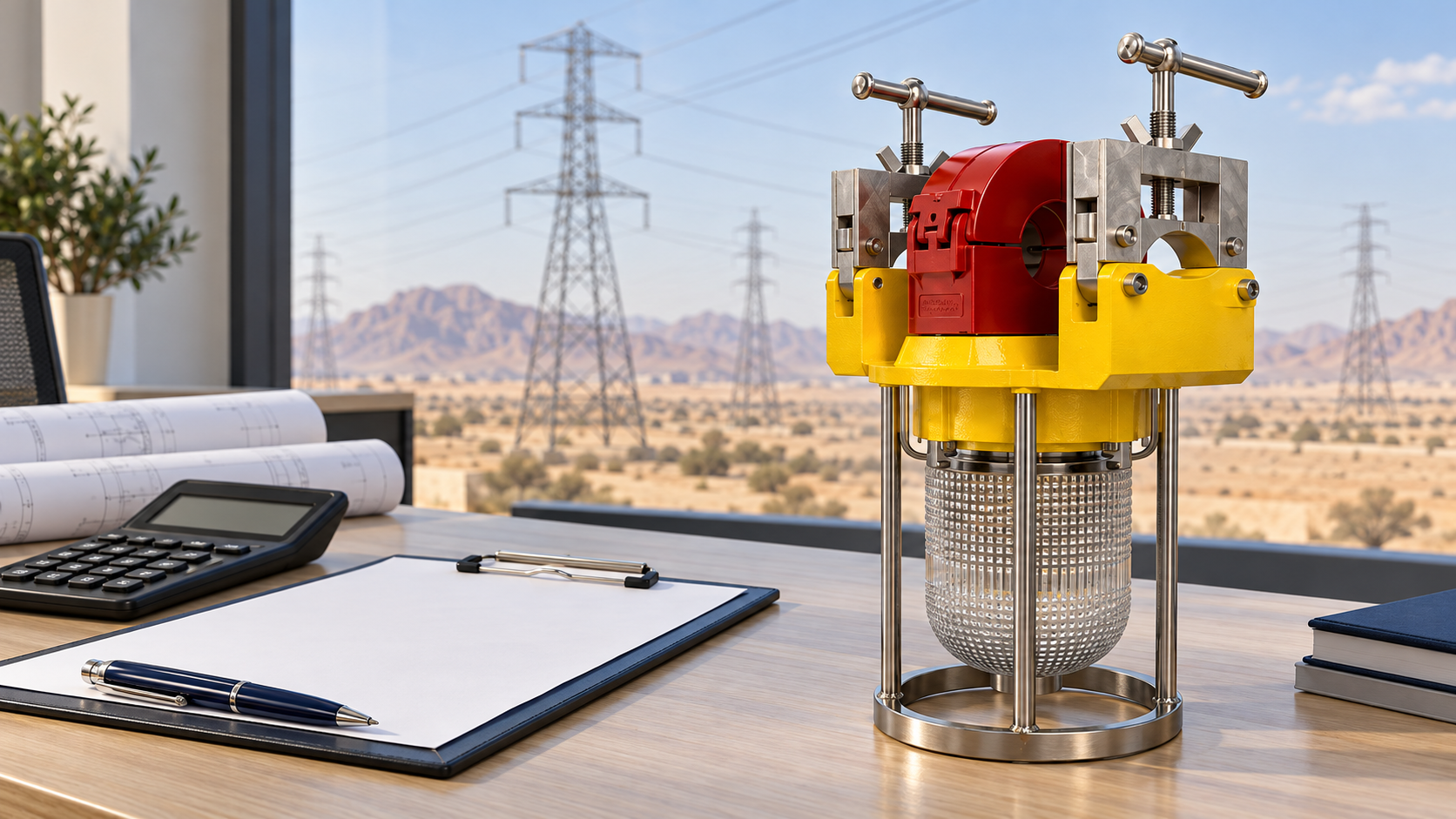
The Alrouf AR-CM-001 is a conductor-mounted LED warning light that harvests energy through electromagnetic induction. Its catalogue lists product specifications and a five-year warranty, but it does not publish a selling price.
For a useful quotation, buyers should identify the required model, quantity and technical requirements before comparing offers.
A price comparison needs a clear product description. For this project, the specified product is a light mounted directly on an overhead conductor.
The AR-CM-001 provides red LED illumination with 360° horizontal coverage. The catalogue describes it as a low-intensity Type B obstruction light for overhead power transmission lines.
When requesting an LED obstruction light price, include the model number and application. This helps establish that the quotation concerns a conductor-mounted unit with inductive power harvesting.
For an explanation of its power source, read our guide to how conductor marking lights work on overhead power lines.
The following checks help define the product you need. They are quotation requirements, rather than a published pricing formula for the AR-CM-001.
The catalogue specifies compatibility with conductor diameters from 15 mm to 40 mm.
Include the actual conductor diameter in your enquiry so the mounting requirements can be reviewed before a quotation is finalized.
The catalogue describes suitability for lines up to 500 kV and lists an operating frequency of 50/60 Hz.
Operating current also matters because the light obtains energy from the magnetic field around the current-carrying conductor. Provide the line’s operating-current information and request confirmation of the applicable current range.
State the number of lights needed. Ask the supplier to show the unit price and total quotation value clearly.
If the required quantity has not been finalized, identify it as provisional so the quotation can be reviewed when the project schedule is complete.
Include the delivery city in Saudi Arabia and your required delivery date. Ask the supplier to state delivery charges, availability and lead time explicitly in the quotation.
The product catalogue does not establish current stock or delivery times.
Use the catalogue information as a checklist when reviewing a quotation for the AR-CM-001.
| Item to check | Catalogue information |
|---|---|
| Model | AR-CM-001 |
| Light source and colour | Red LED |
| Light classification | Low intensity, Type B |
| Horizontal coverage | 360° |
| Compatible conductor diameter | 15–40 mm |
| Ingress protection | IP66 |
| Power consumption | Less than 5 W |
| Automatic control | Integrated photocell |
| Listed service life | Up to 100,000 hours |
| Listed warranty | Five years |
Request confirmation that the quoted product corresponds to the required model and specification.
If your procurement specification uses the term L-810 obstruction light, include that reference in your enquiry.
The AR-CM-001 catalogue references FAA Type L-810 and ICAO Annex 14 Type B. Request the supporting product documents for review against your project requirements.
A quotation should identify the proposed model clearly so that price and documentation can be assessed together.
The catalogue lists a five-year warranty. Ask for the applicable warranty terms in writing, including the scope of coverage and the procedure for submitting a claim.
Also ask the supplier to identify what is included in the quoted price, such as mounting components, delivery charges and applicable taxes. Do not assume these items are included unless the quotation states them.
The catalogue does not publish a price. Contact Alrouf with your quantity and project requirements for a quotation.
Provide the model, conductor diameter, line voltage, operating current, frequency, required quantity and delivery location.
No. Current availability and delivery lead time need confirmation when requesting the quotation.
The catalogue describes inductive power harvesting from the conductor. It does not list a solar panel as its power source.
